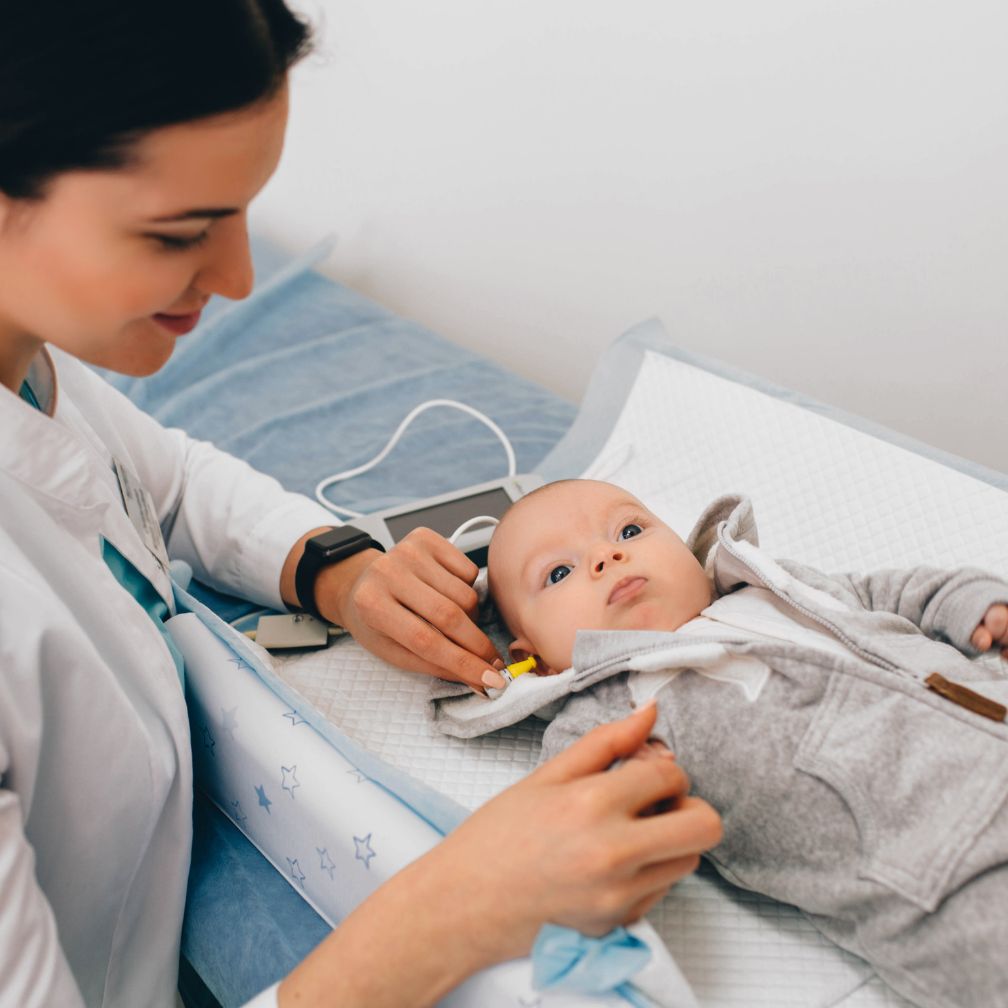
For young parents, hearing that their newborn presents with hearing loss almost always feels terrifying and sad. Yet the optimistic truth is that via rapid screening and support, young children facing auditory deficits routinely attain great success. Truly, these infants routinely acquire speech capabilities, relational skills, and strong connections across their social sphere, securing a prosperous life!
Employing wearable hearing aids or internal cochlear implants delivers two exceptional clinical options for assisting infants with auditory challenges. Down below, we investigate their mechanisms of action to help you decide which pathway best serves your youngster.
Understanding Infant Hearing Loss
Hearing impairment in young infants can trace back to multiple potential origins, including:
- Hereditary genetic markers (even when devoid of any known parental history)
- Documented prenatal viral exposures such as cytomegalovirus (CMV) or rubella
- Significant obstetric complications, including systemic oxygen lack or early gestational delivery
- Specific medications administered within neonatal intensive care
Which action represents the highest priority? Prompt diagnostic confirmation. Owing to these factors, infants delivered in United States hospitals complete hearing screens prior to heading home. Specialized pediatric hearing clinicians strongly promote the standardized “1-3-6” intervention timeline:
- Initial hearing check administered within 30 days of birth
- Officially diagnosed prior to 3 months of age
- Direct clinical management (utilizing hearing tools or specialized rehabilitation) established before 6 months of age
Achieving these explicit timeline goals grants infants their highest probability for superior speech, verbal communication, and brain maturation. If you need guidance on these screenings, your pediatrician will be happy to help!
Deploying Hearing Aids for Newborns
For young children showing mild to severe auditory impairment, digital hearing aids routinely constitute the preferred initial approach. These small, custom-fit devices increase acoustic volume, helping infants distinguish human speech and natural sounds more clearly.
Certified pediatric-grade hearing devices stand as:
- Thoroughly safe for application in newborns just a few weeks after birth
- Built with soft, protective ear impressions that adapt smoothly during physical growth
- Outfitted with child-proof battery covers and specialized pediatric safety components
- Custom-programmed by a pediatric audiologist to align with your child’s hearing needs
While your child matures, these hearing aids demand periodic adjustments to preserve physical comfort and functional efficacy.
Advanced Surgical Solutions: Infant Cochlear Implants
In cases where a child exhibits profound to severe sensorineural hearing impairment and doesn’t benefit enough from hearing aids, a cochlear implant may be recommended. Unlike standard acoustic hearing aids, cochlear implants:
- Are integrated into the inner ear through surgery to restore sound perception directly
- Direct sound past non-working areas across the inner ear system
- Process incoming audio into electrical signals that activate the hearing nerve directly
Modern cochlear implants serve as:
- Formally cleared by the FDA for infants aged 9 to 12 months and older
- Deeply effective when supported through early developmental habilitation and enthusiastic family care
- Considered appropriate only after extensive diagnostic reviews by a certified audiologist and otolaryngologist
This process includes radiological imaging, objective hearing assessments, and open dialogue concerning long-term communicative results.
Contrasting Hearing Aids with Cochlear Implants
- Mild to severe auditory decline uses Hearing Aids; Severe to profound hearing loss necessitates Cochlear Implants
- Non-Invasive wearable design: Hearing Aids; Invasive surgical placement: Cochlear Implants
- Acoustic volume boosting: Hearing Aids; Converts Sound Electrical Signals: Cochlear Implants
- Application starts during early infancy: Hearing Aids; Implantation starts at 9-12 months: Cochlear Implants
Concluding Guidance on Pediatric Hearing Technology
In the event your infant receives a hearing loss diagnosis, you possess multiple viable options and robust community resources exist to help you. Thanks to collaboration with dedicated pediatric audiologists, many young children achieve language development completely comparable to their healthy peers.
No matter if your infant proves better suited for conventional hearing aids or advanced cochlear implants, early management creates a profound lifelong advantage.
Are you looking for clarity regarding your infant’s hearing development? Call our clinic today for a full evaluation and personalized care plan.

