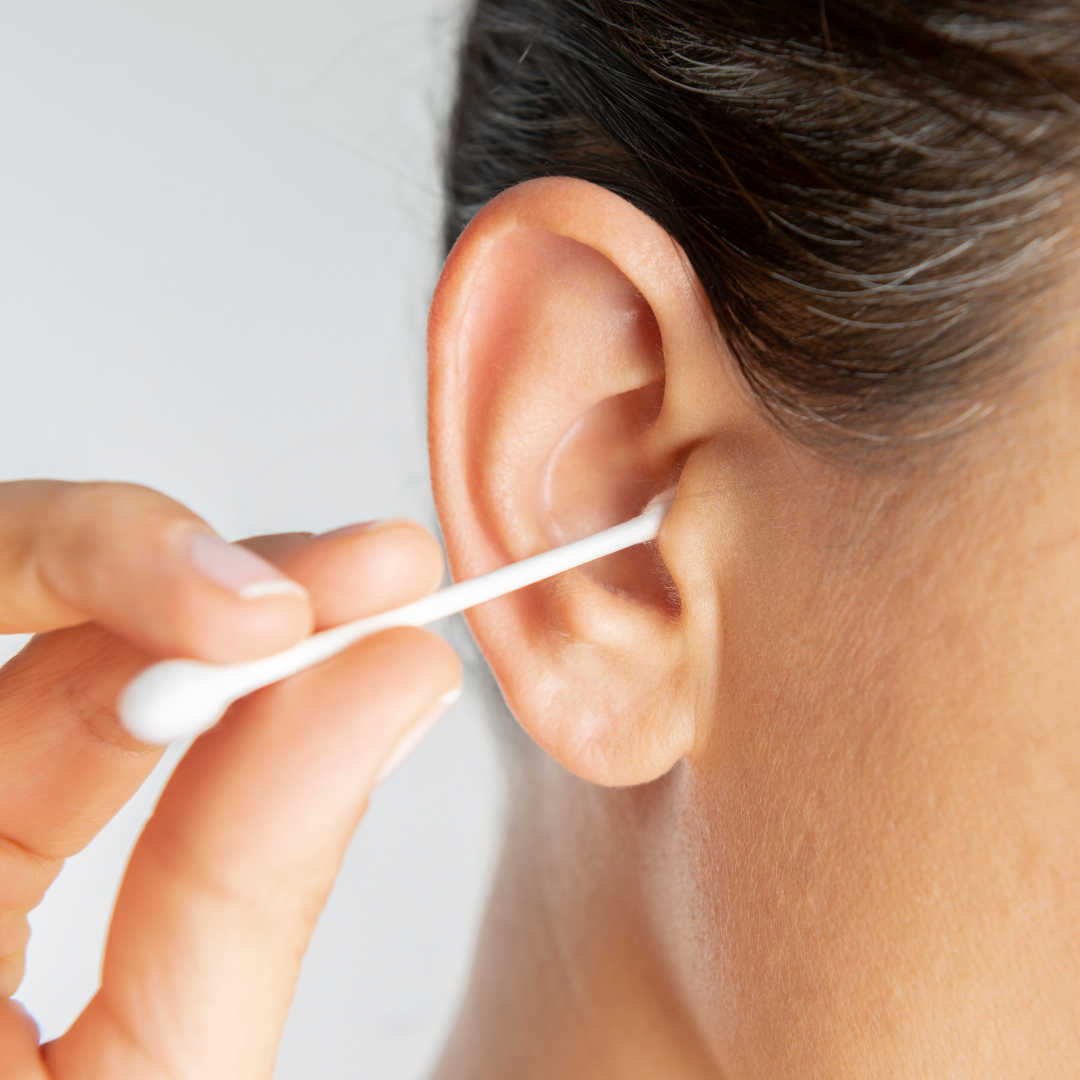
Cotton swabs may seem like convenient ear-cleaning tools, but inserting one into the ear canal can make cleaning harder over time and may damage your ears. Our audiology team evaluates whether cerumen accumulation requires clinical extraction and suggests techniques tailored to your auditory health. The auditory canal generally manages its own cleaning; however, should impaction arise, our team provides safe clinical earwax removal.
Clinical Reasons Why Q-Tips Damage the Ear Canal
Biologically, earwax—known clinically as cerumen—is not an unhygienic waste product. It traps dust and debris, helps limit bacterial growth, lubricates the ear canal, and protects its sensitive skin. Routine chewing and epithelial cell migration continuously transport spent wax toward the concha, where it falls out or clears during bathing.
Inserting a cotton swab directly into the auditory canal interferes with this natural clearance mechanism. Though the cotton tip may capture superficial debris, it frequently rams the larger wax volume deeper toward the tympanic membrane. Frequent swab use consolidates soft wax into a rigid barrier, generating an uncomfortable plugged sensation that fosters continuous overcleaning.
Although swabs can sanitize the outer folds of the auricle, they should never penetrate the delicate ear canal.
Potential Ear Damage and Complications from Q-Tips
The delicate dermal lining of the auditory canal is remarkably thin and susceptible to lacerations. Microscopic tears cause acute discomfort or hemorrhage while exposing tissue to bacteria, which heightens the probability of an outer ear infection. In addition, the cotton head can loosen and become retained as an obstructing foreign object in the ear.
Common mechanical traumas from swabs include:
- Earwax compressed tightly against canal walls
- Cutaneous tearing, swelling, canal inflammation, or bleeding
- Localized microbial infection of the external canal
- Cotton swab fragments trapped inside the auditory canal
- Traumatic puncture or laceration of the eardrum
- Trauma inflicted on the ossicular chain behind the eardrum
- Transient or irreversible shifts in hearing thresholds
- Tinnitus, dizziness, or severe ear pain
Severe injuries are infrequent yet emerge readily if an arm is bumped, the swab slips, or the stick is driven too far.
How Often Should Earwax Get Removed?
The majority of individuals do not require routine or scheduled cerumen extraction. Physiologically stable ears continuously migrate wax outward, while standard showering takes care of the visible ear. Aggressive hygiene removes protective lubricants, provokes skin inflammation, and heightens the likelihood of infection or cerumen buildup.
Intervention becomes necessary whenever wax creates an anatomical blockage, obstructs otoscopic examination, disrupts hearing aid operation, or causes aural distress.
How to Address Earwax Safely at Home
If earwax produces no discomfort or auditory decline, leaving it undisturbed is consistently the safest choice. Use a damp, soft cloth to clean only the exterior ear structures, allowing the inner canal to maintain itself.
When wax needs softening, we may recommend an over-the-counter cerumen-removal product or drops containing ingredients such as mineral oil, glycerin, saline, or carbamide peroxide. Ensure you use the exact recommended volume and follow the labeled duration instructions carefully. Stop if the drops cause pain, marked dizziness, rash, or worsening symptoms.
At-home ear flushing is not suitable for all ears and demands prior clinical verification and step-by-step guidance from a provider. Never use a dental water jet. Avoid hazardous gadgets including ear candles, sharp metal loops, camera-assisted tools, hair clips, and home vacuum extractors. These questionable products can burn sensitive tissues, lacerate the canal, rupture the eardrum, or compact wax deeper.
When to Seek Audiological Care for Cerumen Impaction
Make an appointment when the ear remains obstructed after using softening drops, wax is tightly packed, or home methods prove unsuccessful. Professional intervention is highly advisable for individuals with mobility challenges, narrow ear canals, hearing aid devices, or surgical backgrounds that make home care dangerous.
Schedule an ear exam promptly if you experience:
- Severe ear pain, intractable itching, or outer ear tenderness
- Active bleeding, pus formation, clear exudate, or malodorous drainage
- Systemic fever spikes or acute swelling near the external ear
- New tinnitus or dizziness
- Sudden hearing drops or auditory deficits that remain after wax removal
- Concern regarding a perforated eardrum or foreign cotton debris
- Recurrent impaction that affects hearing devices
Treat sudden hearing loss in one ear as a medical emergency rather than assuming it’s wax. Fast diagnostic testing reliably differentiates a conductive wax plug from an acute, time-sensitive sensorineural emergency.
In-Office Procedures for Clearing Earwax Blockages
We initiate the appointment by visualizing the canal through a diagnostic otoscope or microscope to verify wax presence and check for signs of infection, laceration, or eardrum tears. Selecting the optimal extraction technique depends upon cerumen density, canal geometry, patient health history, prior otologic surgeries, and procedural comfort.
Professional options include:
- Medical-grade wax softeners administered prior to or during the procedure
- Calibrated warm-water irrigation using body-temperature fluid for intact eardrums
- Gentle micro-suction performed under clear binocular visualization
- Direct physical removal using precision instruments such as loops, curettes, or tiny forceps
Operating under direct magnification allows the clinician to avoid sensitive canal walls and halt instantly if the patient experiences pain. Dense or desiccated cerumen impactions frequently necessitate using more than one removal method. After clearance, we conduct a follow-up visualization to ensure the canal walls and tympanic membrane show no complications. If post-cleaning symptoms such as fullness, tinnitus, unsteadiness, or hearing reduction persist, specialized testing can locate the primary cause.
Book a Professional Earwax Evaluation and Removal
Should your ears feel congested or your hearing performance decline, arrange an evaluation with our audiology clinic instead of reaching for swabs. We begin your evaluation with an in-depth review of symptoms, surgical ear history, hearing aid maintenance, home cleaning attempts, and individual tendencies toward wax accumulation. Connect with our practice today to reserve an appointment for safe, professional earwax removal.

